
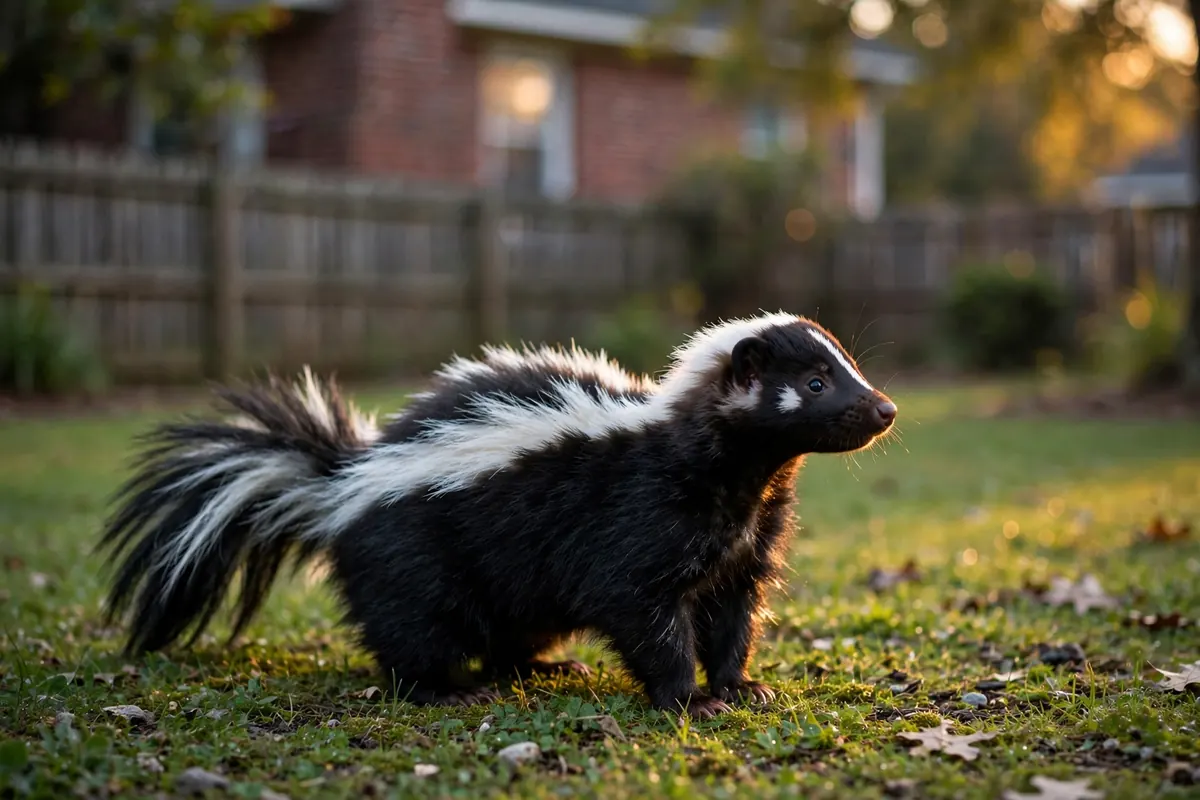
Skunk Exclusion in Gadsden, AL
Long-term skunk exclusion in Gadsden AL means one thing: closing every entry point so the next skunk that wanders through the yard keeps wandering.
Here's the part most people learn the hard way: removing a skunk without sealing the den just opens a vacancy. Skunks follow scent trails left by previous occupants, and an empty burrow under your shed is prime real estate. Exclusion is the step that makes removal permanent.
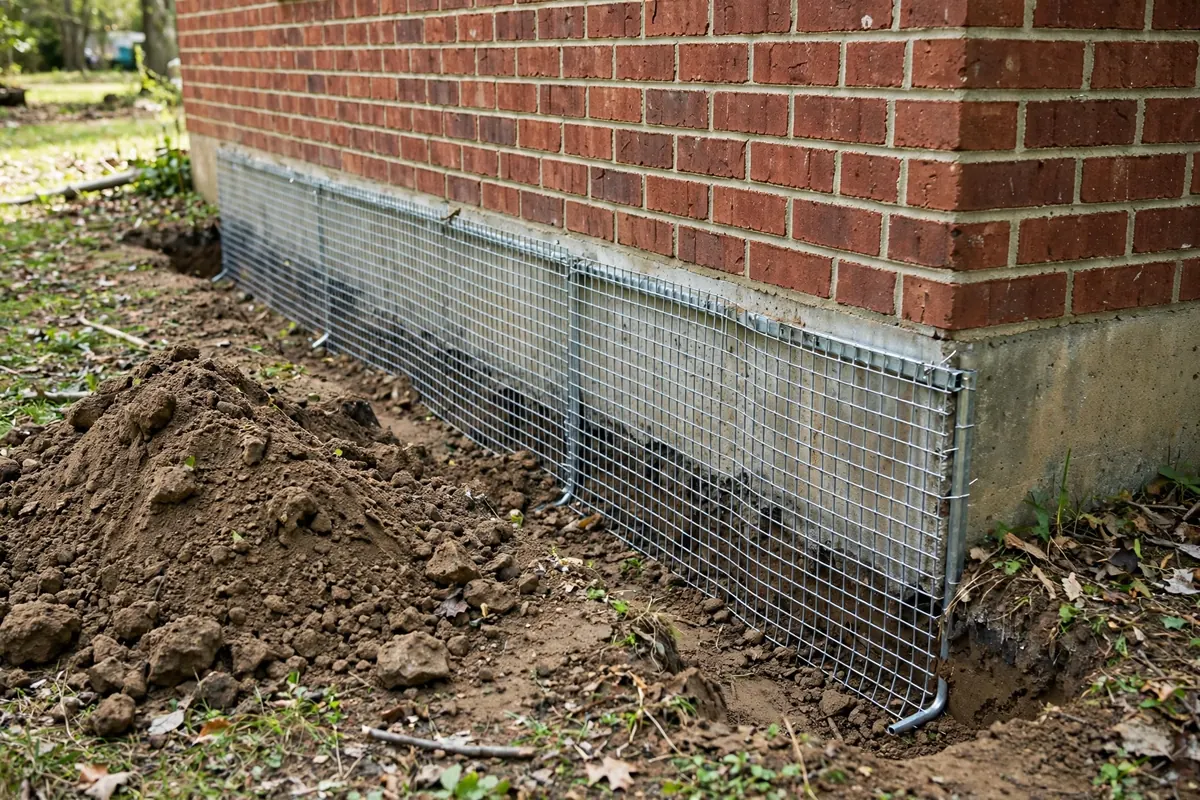
We seal gaps under porches, decks, and sheds with buried hardware-cloth barriers — bent outward in an L-shape underground so digging skunks hit wire no matter which way they dig. Crawl space vents get fitted covers, and gaps in skirting get closed properly.
Exclusion happens after we're sure the den is empty. Sealing an animal inside is how you get a much worse smell problem. If you haven't dealt with the animal yet, start with our Gadsden skunk removal homepage — then call (256) 602-8128 to talk through the full job.
What gets sealed — and how
Under sheds and porches. Hardware cloth buried 8–12 inches deep and bent outward, so diggers hit wire.
Deck perimeters. Lattice looks nice but hides gaps; we close the real openings behind it.
Crawl space vents. Damaged or missing vent covers are an open invitation — fitted covers close them.
Foundation gaps. Cracks and gaps where the siding meets the ground get sealed against digging.
Your home needs exclusion if you have
- One open gap under a deck or shed
- A vent cover that's bent, rusted, or missing
- Daylight visible under the skirting from inside the crawl space
- A previous den that was never sealed after the skunk left
The barrier has to go underground
A skunk's answer to a fence is to dig under it. Surface-level fixes — boards, bricks, chicken wire laid on the ground — get dug under in a night or two. The barrier that holds is hardware cloth buried a foot deep and bent outward in an L: the skunk digs down, hits wire, and gives up.
It's unglamorous work, but it's the difference between solving the problem once and solving it every spring.
Common questions
What does skunk exclusion involve?
Sealing every gap a skunk could use — buried wire barriers under sheds, porches, and decks; fitted covers on crawl space vents; and closed gaps in skirting and along foundations.
Can I just seal the hole shut myself?
Not while anything might be inside. Sealing a skunk — or a litter of kits — inside a den creates a terrible smell problem and an animal welfare problem. We confirm the den is empty first, sometimes using one-way doors that let animals out but not back in.
Will exclusion keep other animals out too?
Yes. The same barriers that stop skunks stop opossums, armadillos, and stray cats from denning under structures — they all use the same openings.
Do I need exclusion after trapping?
Strongly recommended. Trapping removes the current animal; exclusion is what stops the next one. Without it, you're likely to repeat the whole job within the season.
Dealing with a skunk right now?
Tell us what you're seeing or smelling and we'll talk through the next step.